Industrial and workshop presses
Industrial and workshop presses: the backbone of modern production At the heart of every production line and industrial workshop, where power and precision come first, industrial and workshop presses play a vital role. T

Three-plate pneumatic and hydro-pneumatic press, cast-iron body

Three-plate press, steel body

Crank press, cast-iron body
Crank press, steel body

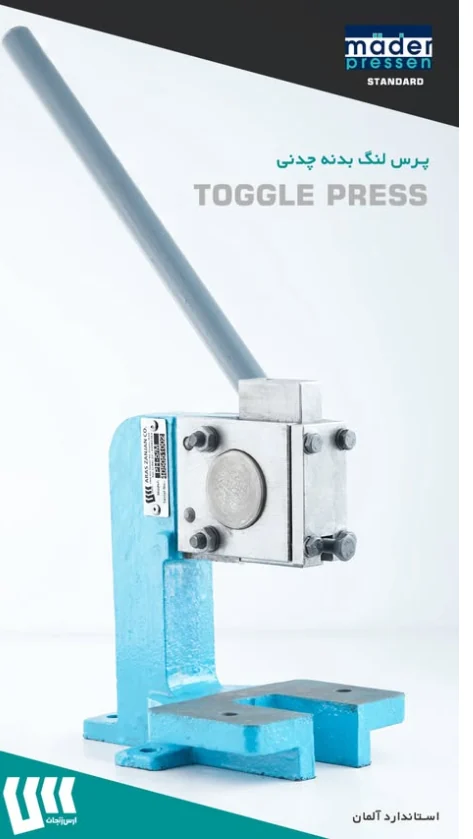
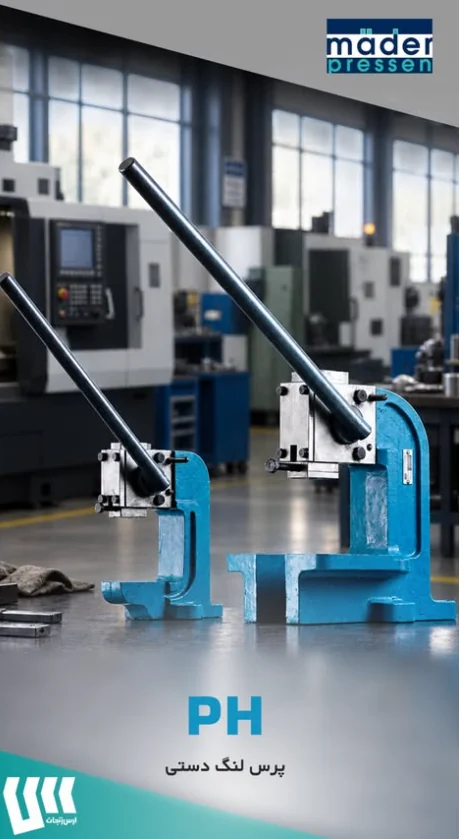
Manual lever press, cast-iron body

Manual lever press, steel body

Pneumatic press, cast-iron body (direct-acting)
Pneumatic press, steel body (direct-acting)

Hydro-pneumatic press, cast-iron body (direct-acting)

Hydro-pneumatic press, steel body (direct-acting)
Industrial and workshop presses: the backbone of modern production
At the heart of every production line and industrial workshop, where power and precision come first, industrial and workshop presses play a vital role. These powerful machines are essential tools for forming, cutting, bending and assembling metal and non-metal parts. With decades of experience and current technical know-how, Aras Zanjan is proud to offer industries and workshops across the country an outstanding range of quality presses that meet international standards. In this guide we look closely at the types of presses, their applications and the key points in choosing and maintaining them.
Types of industrial and workshop presses
Presses generally fall into two main groups, each with its own advantages and applications:
1. Hydraulic presses
Hydraulic presses use fluid pressure (usually oil) to generate compressive force. Thanks to their high power, precise force control and ability to hold pressure for long periods, they are ideal for operations that need a steady, smooth force.
- Advantages: adjustable force, slow and even speed, very high force output, suitable for deep drawing and complex forming.
- Applications: moulding, deep drawing, forging, assembly, precision punching and cutting thick material.
2. Mechanical presses
Mechanical presses use gears and a crankshaft to turn the motor's rotation into a powerful linear stroke. Their high speed and fast cycle make them well suited to mass production, punching and cutting.
- Advantages: high speed, suited to mass production, relatively lower maintenance cost, accurate when producing identical parts.
- Applications: punching, cutting, bending and forming small and medium parts in high volumes.
Applications of presses in industry
Industrial and workshop presses are versatile tools used across many industries:
- Automotive: body panels, chassis and engine parts.
- Home appliances: metal parts for refrigerators, washing machines and cookers.
- Metalworking and metallurgy: bending profiles, cutting sheet and forming metals.
- Tools and hardware: screws, nuts, washers and hand tools.
- Electronics: punching and forming fine metal parts.
Choosing and maintaining correctly: the key to productivity
Choosing the right press for your needs is a vital step in optimising your production processes. Aras Zanjan's experts are ready to advise you on the best model for your application, production volume and budget. After purchase, proper maintenance keeps a press efficient for a long life:
Key maintenance points
- Periodic inspection: regular checks of moving parts, the hydraulic system (on hydraulic presses) and electrical connections.
- Oiling and greasing: using suitable lubricants to reduce friction and wear.
- Regular calibration: making sure the press stays accurate over time.
- Operator training: making sure the machine is run correctly and safely by trained staff.
Why Aras Zanjan?
Focused on innovation, quality and after-sales service, Aras Zanjan is a reliable partner for your industrial needs. With advanced industrial and workshop presses, we help you achieve maximum productivity, accuracy and safety in your production. Secure the future of your production with Aras Zanjan.